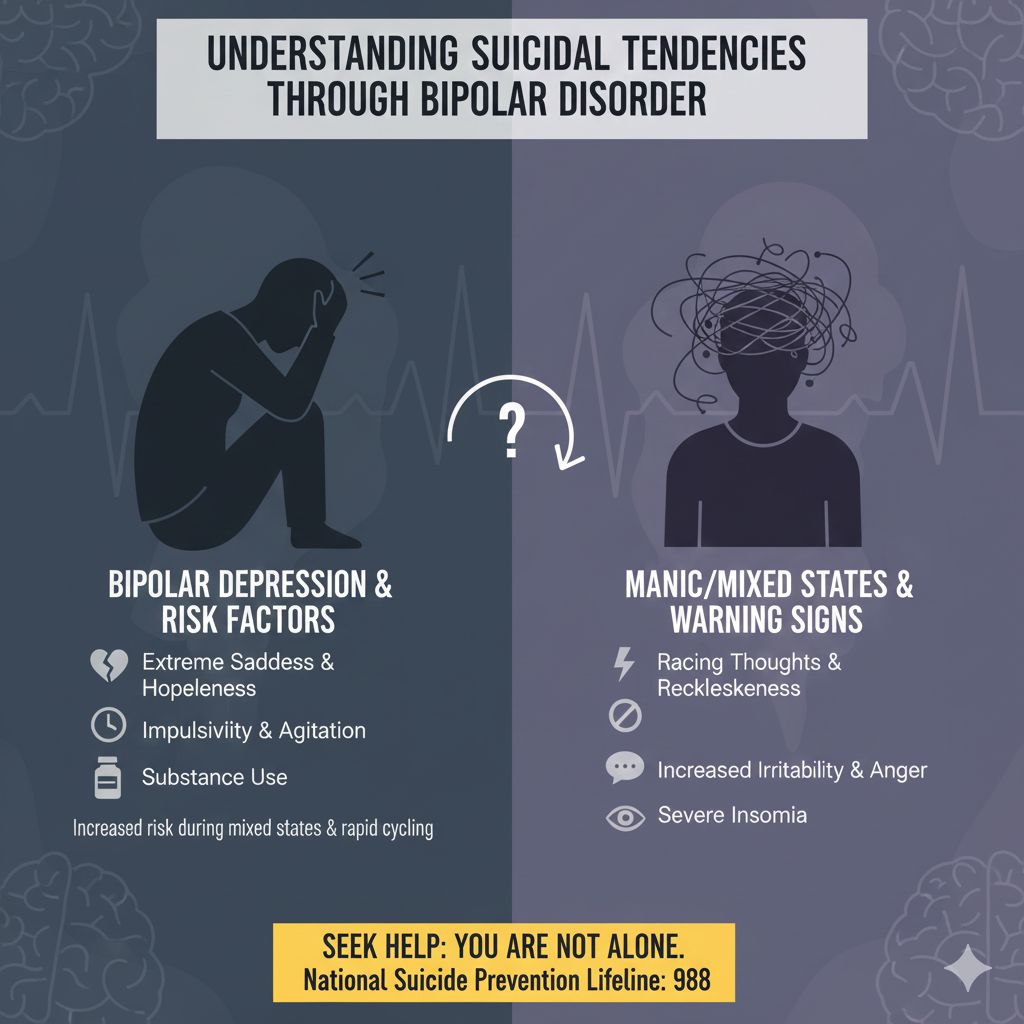

Look, I know a diagnosis like Bipolar Disorder—whether Type I or Type II—feels like a massive weight. It’s a complex battle, and it’s one that can make you feel like you’re no longer in the driver’s seat of your own life.
But here’s the firm truth: while your family, friends, and doctors are your “support crew,” you are the commanding officer. No one else can do the heavy lifting of recovery for you. You have to decide to get better, and you have to own the process.
Here is your tactical plan for taking back control.
Here is your tactical plan for taking back control.
- Weaponize Knowledge
You wouldn’t enter a boardroom or a job site without knowing the facts. Your health is no different.
Get in the Know: Read the literature. Understand the biological triggers of your highs and lows. Knowledge strips away the “mystery” and the fear.
Educate Your Unit: Share what you learn with your inner circle. When they understand the facts, they can support you effectively instead of reacting with confusion when things get tough.
Stay in Command: Use your knowledge to ask your doctor better questions. Don’t just be a passenger in your treatment; be an active participant.
Force a Sense of Normality
- Force a Sense of Normality
The disorder wants to disrupt your life; don’t let it. The best way to “forget” the label and remember the man is to stick to your mission.
Maintain the Routine: Work, chores, walking the dog—these aren’t just tasks; they are anchors. They keep you grounded in reality.
Protect Your Sleep: Aim for 6 to 8 hours. For a man with bipolar disorder, sleep deprivation is like pouring gasoline on a fire.
Burn Off the Stress: Regular exercise is a non-negotiable tool for processing negative energy and stabilizing your mood.
Maintain Your “Equipment” (Medication)
- Maintain Your “Equipment” (Medication)
Bipolar is often a recurrent battle. You don’t stop maintenance on your truck just because it’s running well today; don’t stop your meds just because you feel “fine.”
Stay Consistent: Mood stabilizers and anti-depressants work by building a baseline. Taking them daily—even when you feel great—is what prevents the next crisis.
Communicate Side Effects: If the meds are making you feel sluggish or “off,” don’t just quit. Talk to your doctor immediately about adjusting the dosage or finding an alternative.
Clear the Field of Stimulants and Stress
- Clear the Field of Stimulants and Stress
You need to manage your internal climate. If you’re constantly pumping yourself up or stressing yourself out, you’re inviting an episode.
Identify the Triggers: Whether it’s a high-conflict person or a chaotic situation, learn to walk away. Agitation is the enemy.
Cut the Stimulants: Nicotine and excessive caffeine (coffee, energy drinks) are fast tracks to sleeplessness and manic energy. Dial them back or cut them out.
The Hard Truth About Alcohol
- The Hard Truth About Alcohol
If you’re serious about your health, you need to look at your drinking.
Alcohol is a Depressant: It might take the edge off for an hour, but it triggers the very “down” cycles you’re trying to avoid.
The Chemical Conflict: Alcohol neutralizes your medication and can cause dangerous interactions that damage your liver. It’s a liability you can’t afford.
Know When to Call for Backup
- Know When to Call for Backup
Being “tough” doesn’t mean suffering in silence. It means being smart enough to know when the situation has gone beyond your current capacity.
Professional Alliances: Treat your therapist and doctor like your most trusted advisors.
Early Intervention: If you feel things spiraling, reach out before the crisis hits. There is no shame in calling for reinforcements to protect your health and your future.