
Managing the Highs and Lows: A Tactical Strategy for Bipolar Stability
If you are dealing with bipolar disorder—whether you’ve just been diagnosed or have been in the trenches for years—it’s important to understand one thing: this is a manageable condition. It isn’t a character flaw, and it doesn’t have to be a life sentence of instability.
To maintain a high-performance life, you have to treat bipolar disorder like any other chronic physical condition—with a consistent, long-term Standard Operating Procedure (SOP). Here is the operational breakdown for stabilizing your symptoms and holding the line.
The Reality of the Condition
The Reality of the Condition
Bipolar disorder is classified as a recurrent illness. This means that managing it isn’t about a “one-time fix”; it’s about a long-term preventive strategy.
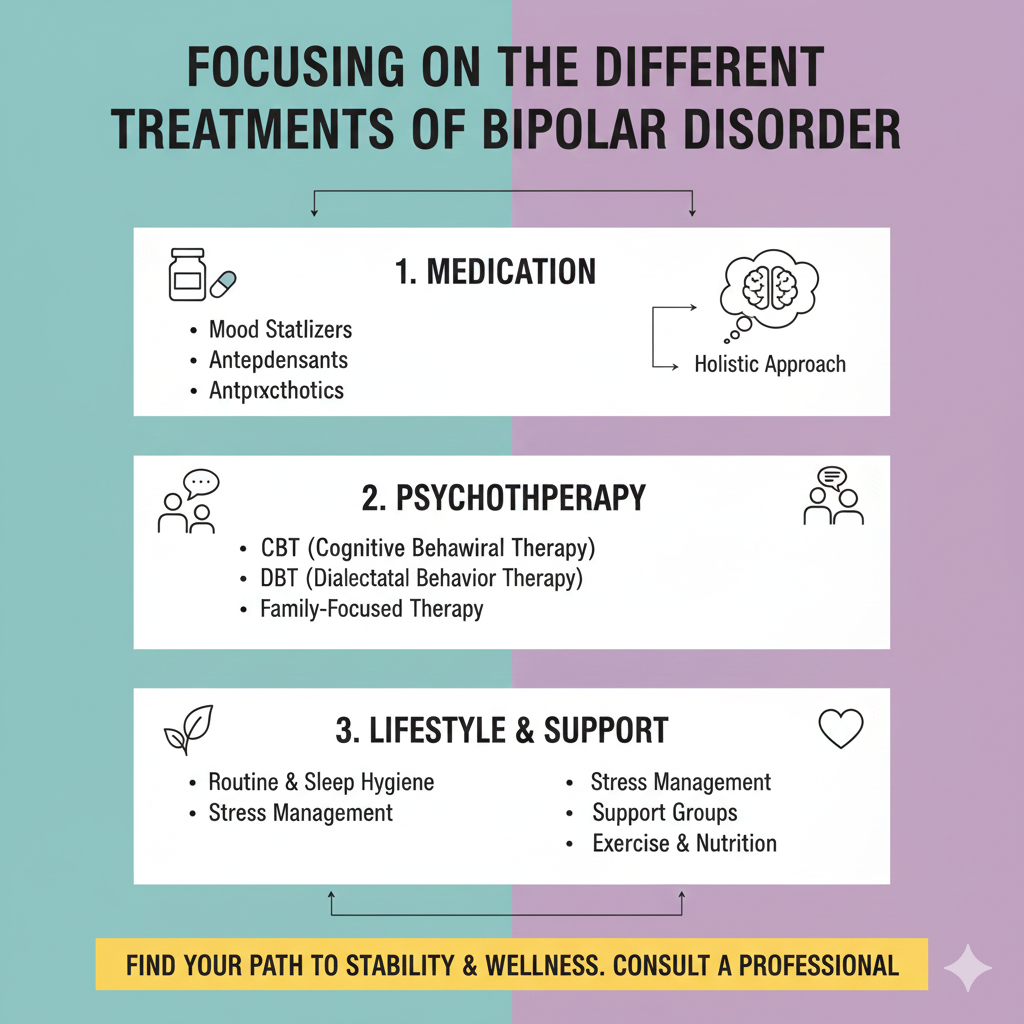
The Optimal Strategy: Clinical evidence suggests that the most effective way to manage the disorder is a “combined arms” approach: Medication paired with Psychosocial Treatment.
Preventive Maintenance: Because the condition can recur, you need a plan that looks months and years ahead, not just days.
Step 1: Commit to Continuous Medication
Step 1: Commit to Continuous Medication
In the heat of a mission, you wouldn’t stop maintaining your equipment just because it’s working well. The same applies to your brain chemistry.
Avoid the “Occasional” Trap: Treating bipolar disorder only when “episodes” happen is a losing strategy. Success comes from continuous medication and consistent attention.
Progressive Control: Staying on your regimen helps diminish erratic behavior over time, allowing your baseline to remain steady.
The Consistency Rule: Do not take breaks from your treatment. If you experience mood swings despite staying on your meds, treat it as a “system error” and report it to your physician immediately.
Step 2: Establish a Command Link with Your Physician
Step 2: Establish a Command Link with Your Physician
Your doctor is your lead tactical advisor. For the treatment to work, the communication lines between you must remain open and transparent.
Early Intervention: Physicians have the tools to prevent destructive episodes, but only if they have the data. Early reporting allows for quick adjustments to your treatment plan before a situation escalates.
Open Communication: Don’t hold back your concerns or side effects. Working closely with your doctor to adjust options makes the difference between a plan that works on paper and one that works in your real life.
The Strategy for Long-Term Success
The Strategy for Long-Term Success
Be Proactive: Don’t wait for a crisis to check in with your support team.
Monitor the Vitals: Keep a log of your moods. If you see a pattern shifting, act fast.
Stay the Course: Stability is built through the discipline of daily habits and medical compliance.
The Bottom Line
Stability is possible, but it requires the grit to stay consistent even when you feel “fine.” By combining the right medication with professional guidance and a disciplined lifestyle, you can neutralize the destructive swings and get back to leading your life with confidence.