
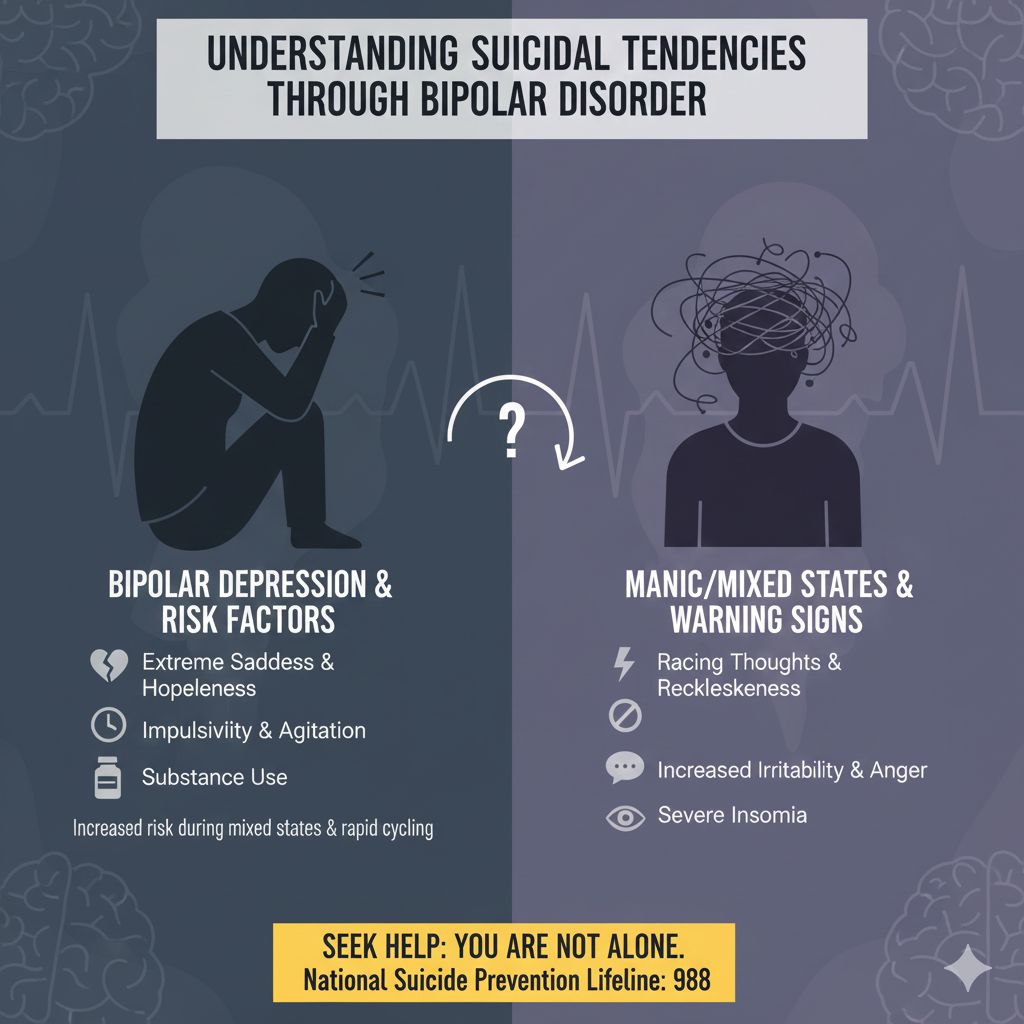
This is a heavy topic, but it is one that needs to be met with absolute clarity and zero stigma. Whether you are a young man just starting out or a seasoned professional, mental health challenges—specifically Bipolar Disorder—can feel like an invisible war. If you or a man you know is struggling, understanding the “Mission Map” of this condition is the first step toward safety.
Here is a breakdown of the disorder and, more importantly, how to identify and prevent the ultimate risk: suicide.
Understanding the Terrain: The Subtypes
- Understanding the Terrain: The Subtypes
Bipolar Disorder isn’t just “mood swings.” It is a clinical condition that alters how the brain processes energy, emotion, and reality. Understanding which “type” you are dealing with helps in creating an effective tactical plan for treatment.
Bipolar I: Defined by manic episodes that last at least seven days or are severe enough to require immediate hospital care. Depressive episodes usually occur as well, but the hallmark is the intensity of the “high.”
Bipolar II: This is defined by a pattern of depressive episodes and hypomanic episodes. Hypomania is a less severe version of mania; you might feel highly irritable or unusually energetic, but it doesn’t typically require hospitalization. In Bipolar II, the “lows” (depression) usually last much longer than the “highs.”
Cyclothymia: Consider this a milder, chronic form of the disorder. The highs and lows are present for at least two years but don’t quite reach the clinical severity of Type I or II. However, it still requires management to prevent it from escalating.
Psychosis: In severe cases, a person may lose touch with reality. This involves delusions (false beliefs) or hallucinations (seeing or hearing things that aren’t there). This is a medical emergency and requires immediate professional intervention.
The Hard Truth About the Suicide Risk
- The Hard Truth About the Suicide Risk
We need to be firm here: suicide is the greatest threat posed by this disorder. When the brain is overwhelmed by shifting chemistry, it can create a “tunnel vision” where death feels like the only exit from the pain.
The Overwhelm: It’s not a lack of character; it’s a system overload. The person’s thoughts and feelings become so distorted that they believe they are a burden or that they are incapable of ever feeling “normal” again.
The Danger Zone: Statistics show the risk of suicide is often highest in the early stages of the illness or during a “mixed episode” (where one feels the energy of mania combined with the despair of depression).
The Mission of the Family: If a man in your life is diagnosed, the family becomes the “Quick Reaction Force.” It is your job to observe, support, and ensure he is connected to professional medical help.
Tactical Observation: Spotting the Red Flags
- Tactical Observation: Spotting the Red Flags
You wouldn’t ignore a warning light on your car’s dashboard; don’t ignore these signs in yourself or your brothers. If you see these, it is time for a “Tactical Intervention”:
Verbal Cues: Talking about wanting to die, being a “burden,” or an unusual obsession with the afterlife.
Total Hopelessness: A persistent belief that the future is empty or that they are “trapped” with no way out.
Substance Abuse: Using alcohol or drugs to “self-medicate” the highs and lows. This only adds fuel to the fire.
Finalizing Affairs: Giving away prized possessions, writing “goodbye” notes, or suddenly getting affairs in order for no clear reason.
Social Withdrawal: Pulling away from the “tribe”—friends, family, and responsibilities.
The Action Plan: How to Intervene
- The Action Plan: How to Intervene
If you or someone you know is in the “Danger Zone,” do not negotiate with the situation. Take decisive action.
Never Leave Them Alone: If someone is suicidal, stay with them. Your presence is a physical tether to reality.
Secure the Environment: Remove access to any means of self-harm (firearms, medications, etc.). Minimize the opportunity for a permanent mistake during a temporary crisis.
Call in the Pros: Reach out to a doctor, a mental health crisis line, or emergency services immediately. This is not a “DIY” fix.
Eliminate Stigma: There is no “manning up” through a chemical imbalance. Seeking medical help is the most courageous and masculine move a man can make when his life is on the line.
The Bottom Line
The Bottom Line
Life is the ultimate asset. Bipolar Disorder is a grueling opponent, but it is one that can be managed with the right medical team and a solid support system. Do not let a temporary distortion of thought rob you or your loved ones of their future.
If you or someone you know is struggling right now, please reach out to a local crisis hotline or a healthcare professional immediately.